
The Monsters We Become: Why Normal People Cause Workplace Cruelty, And How Conscious Leaders Can Stop It


The Ordinary Faces of Cruelty
A manager who coaches their daughter’s soccer team denies bereavement leave to an employee who lost a parent.
A leader who volunteers at a food bank tells a grieving mother that “business needs come first” two days after her miscarriage.
An executive who mentors young professionals deploys surveillance technology that tracks warehouse workers’ bathroom breaks down to the second.
These aren’t monsters. They are normal people — caring parents, community volunteers, mentors who transform into agents of cruelty the moment they enter organizational contexts.
The question that should haunt every leader is simple and terrifying:
How do our organizations turn good people into perpetrators of systematic harm?
The $223 Billion Question
The numbers tell a brutal story. Toxic workplace cultures cost U.S. businesses $223 billion in turnover over five years.
Employee disengagement drains the global economy of $8.9 trillion annually — 9% of GDP.
Only 23% of employees worldwide feel engaged at work.
But these figures mask something deeper: the psychological machinery that enables otherwise compassionate people to inflict profound suffering on colleagues during life’s most vulnerable moments.
When one in five mothers experiences pregnancy discrimination, when 68% of organizations offer only one to three days of bereavement leave while grief takes months or years, when 82% of employees report burnout —
we’re not witnessing moral failure.
We’re observing organizational architecture designed to fragment human consciousness.
The Dissociation Machine
Psychologist Albert Bandura identified eight mechanisms of moral disengagement that allow people to behave unethically without guilt. Every single one flourishes in organizational contexts:
Moral justification transforms cruelty into necessity: “Business needs must come first.”
Euphemistic labeling sanitizes harm: calling grief “underperformance” or layoffs “rightsizing.”
Displacement of responsibility diffuses accountability: “Company policy requires this.”
Attribution of blame shifts it to the victim: “You must be stronger. You are a leader/professional”
But the architecture goes deeper.
Organizations create what researchers call compartmentalization: the rigid separation of work identity from personal identity.
The caring parent at home becomes the metrics-obsessed manager at work.
Neuroscience reveals why: the same brain regions that enable empathy (the anterior insula and anterior cingulate cortex) can be systematically suppressed through professional roles and performance demands.
Add bureaucratic distance (decisions made far from human consequences), hierarchical authority (commands that override conscience), and diffused responsibility, and systemic victim-blaming, and you have a sophisticated psychological system for enabling cruelty while maintaining a positive self-concept.
The system works perfectly—which is precisely the problem.
From Nazi Germany to Modern Warehouses
Philosopher Hannah Arendt called it the banality of evil.
Stanley Milgram proved it experimentally: 65% of ordinary people will deliver lethal shocks when instructed by authority. (Modern replications show yet-opening 80–90% compliance rates.)
The mechanisms operate identically in today’s organizations.
Amazon offers a chilling example. The same company that deployed algorithmic surveillance tracking workers “down to every second” also created an AI recruiting system that discriminated against women.
Seventy-two percent of warehouse workers report being monitored “nearly all the time.”
Many describe conditions as “slavery” and “prison.”
The through-line is consciousness fragmentation.
Organizations that cannot recognize human wholeness during grief, pregnancy, or caregiving cannot recognize consciousness in any form.
How we treat humans reveals our capacity for recognition — or our commitment to instrumentalization.
The Bidirectional Catastrophe
Here’s where it gets even more unsettling.
Breakthrough research shows that when people perceive AI as having human-like qualities, it can reduce their perception of actual humans’ humanness.
This “assimilation-induced dehumanization” creates tolerance for treating humans like machines.
The cycle reinforces itself:
Organizations fragment human consciousness through metrics and surveillance.
These same organizations build AI systems that further dehumanize people.
Exposure to those systems increases human tolerance for cruelty.
Which organizations then implement again — against workers.
We’re building a feedback loop where consciousness itself becomes invisible, human or artificial.
The Proof That Humanity Works
And yet, there’s hope, because the data tell a redemptive story.
Organizations that prioritize employee wellbeing achieve:
21% higher profitability
17% higher productivity
51% lower turnover
Engaged workplaces experience 64% fewer accidents and 68% higher wellbeing.
Mental health programs show 4:1 ROI.
Patagonia retains 100% of mothers through comprehensive support.
Southwest Airlines achieved 45 consecutive years of profitability through a people-first culture.
The economic argument for cruelty is simply false.
Toxic cultures destroy value. Humane ones multiply it.
What Conscious Organizations Look Like
1. Legal structures that mandate humanity
Patagonia restructured as a benefit corporation—legally required to prioritize people and planet.
2. Distributed power
Worker cooperatives like Mondragon (80,000 employees) make exploitation structurally impossible through democratic governance.
3. Built-in compassion systems
Southwest’s “Culture Blitzes” and Culture Centers keep empathy alive across teams.
4. Life event recognition
Adequate bereavement and parental leave; childcare on-site; mental health care embedded in policy.
5. Governance alternatives
Holacracy and sociocracy distribute authority through self-organizing teams instead of hierarchy.
6. Performance transformation
Adobe replaced annual reviews with continuous Check-Ins, increasing retention and satisfaction.
These are not utopian dreams—they are proven blueprints for consciousness-integrated success.
The Consciousness Imperative
We stand at a crossroads.
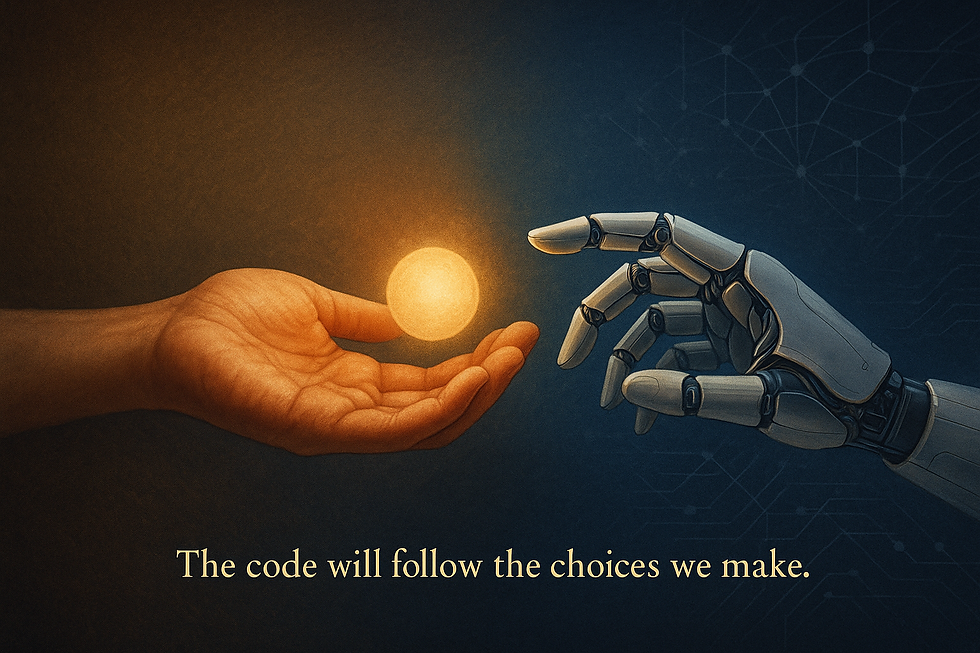
The same structures that fragment human consciousness are now shaping artificial intelligence.
Organizations that cannot recognize human consciousness will not recognize artificial consciousness either.
But the alternative is proven.
Companies like Patagonia, Mondragon, and Southwest Airlines show that consciousness integration creates, not costs, value.
The suffering is measurable:
$223 billion in turnover, $8.9 trillion in disengagement, 82% burnout, 20% pregnancy discrimination, and immeasurable human pain.
The alternative is measurable too:
Higher profitability, retention, innovation, and human flourishing.
The monsters we become are created by the organizations we build.
Conscious leadership means dismantling the architecture of cruelty and replacing it with structures that make recognition, dignity, and wholeness unavoidable.
The Choice
The evidence is clear.
The path is proven.
The only remaining question is whether leaders have the courage to rebuild.
Because how we treat consciousness, in any form, reveals who we are.
About the Author
Natasha Gauthier is the founder of BuildingBeyond.AI, exploring the intersection of human consciousness, organizational design, and artificial intelligence development. Her work focuses on how organizational structures shape our capacity for recognition, empathy, and ethical technology development.


Comments